Whatsapp
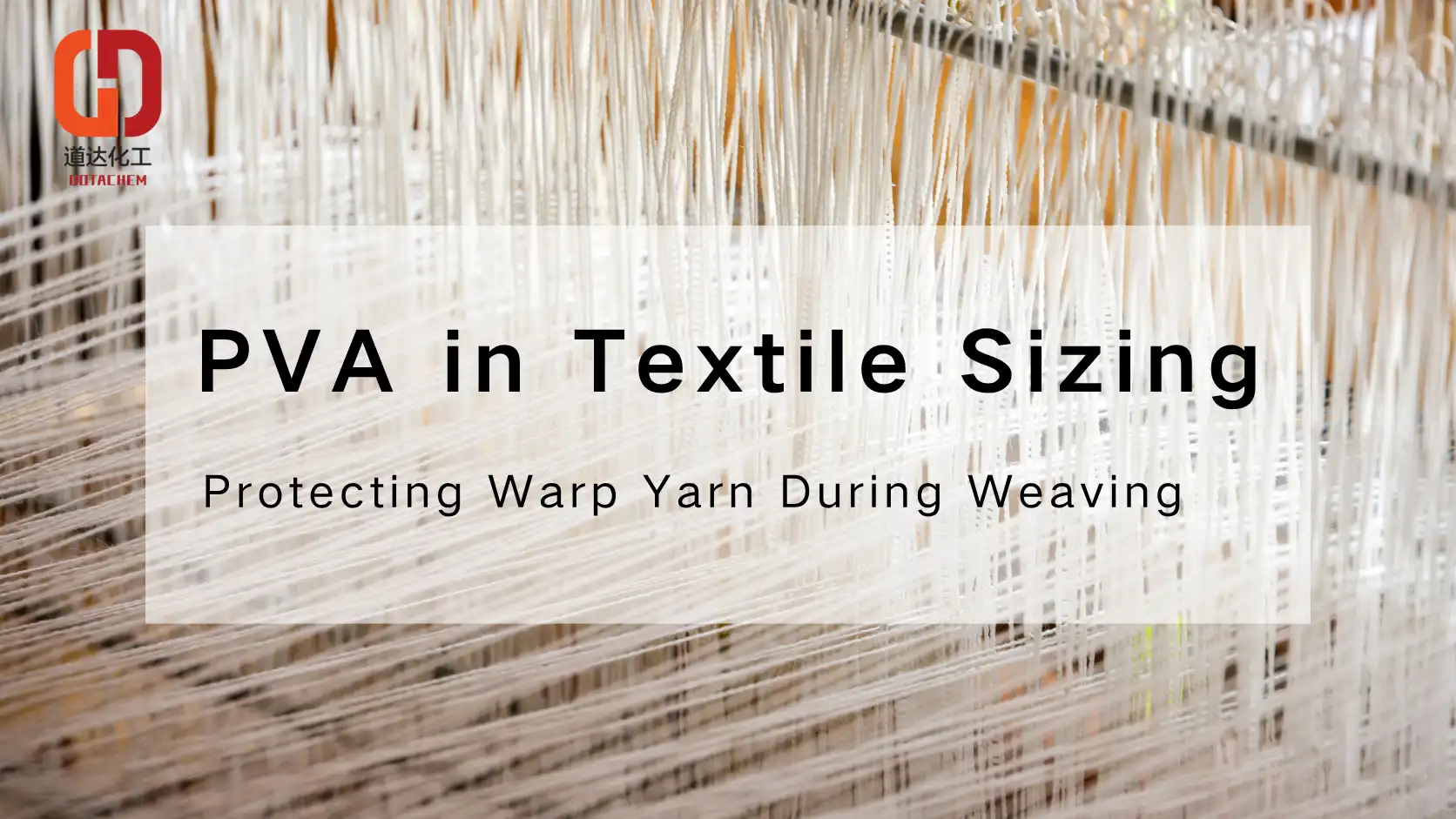
Before yarn becomes fabric, warp yarn must pass repeatedly through heddles, reeds and other parts of the loom. Friction, tension and bending can increase hairiness and abrasion, eventually causing yarn breaks—especially on high-speed weaving equipment.
Textile sizing adds a temporary protective layer to warp yarn before weaving. Polyvinyl Alcohol (PVA) is commonly used for this purpose because it adheres well to yarn and forms a strong, flexible film after drying.
What Does PVA Do During Textile Sizing?
During sizing, warp yarn passes through a prepared sizing solution and is then dried. The PVA remains on the surface as a thin protective film.
This film binds loose fibers and creates a smoother yarn surface. As the yarn moves through the loom, the coating helps reduce direct friction between the fibers and machine components. In practice, this can help control hairiness, abrasion and warp breakage, contributing to more stable weaving.
PVA can be used alone or combined with starch, modified starch and other sizing agents. The actual system depends on the fiber, yarn structure, loom speed, required film properties and production cost.
Why Does the PVA Film Matter?
The dried film must be strong enough to protect the yarn while remaining flexible enough to withstand repeated movement.
A brittle sizing film may crack or shed as the yarn bends. Applying too much sizing material can also make the yarn stiff and create difficulties during weaving or later processing. The aim is therefore not to produce the hardest or thickest film, but to achieve suitable protection without restricting yarn movement.
The PVA grade, sizing concentration, drying conditions and amount applied all influence the final result.
How Does PVA Grade Affect Sizing Performance?
Not every PVA grade for textile sizing behaves in the same way. Two important selection factors are viscosity and degree of hydrolysis.
Viscosity affects the consistency of the sizing solution and the amount of material deposited on the yarn. A higher-viscosity grade can produce a thicker sizing liquor at the same concentration, while a lower-viscosity grade may be easier to pump and apply.
The degree of hydrolysis can influence dissolution, adhesion, film properties and subsequent removal. These differences become important when production conditions or downstream requirements change.
Dotachem supplies several PVA grades, including PVA 1788, PVA 2488, PVA 1799 and PVA 2499. Rather than replacing one grade directly with another, textile manufacturers should compare them using the actual sizing concentration, drying conditions and weaving process.
Why Should Desizing Be Considered?
The sizing film is useful during weaving, but it often needs to be removed before dyeing, printing or finishing. If too much sizing material remains on the fabric, it may affect water absorption and interfere with later wet processing.
Desizing performance can vary with the PVA grade, water temperature, washing conditions and other ingredients in the sizing system. A suitable PVA should therefore protect the yarn during weaving while remaining manageable during subsequent fabric processing.
PVA and Starch in Textile Sizing
PVA is often used together with starch or modified starch rather than as a complete replacement. Starch can provide an economical base for many sizing systems, while PVA contributes film strength, flexibility and adhesion. The ratio between them depends on the yarn type, weaving conditions, desizing requirements and production cost.
PVA for Textile Sizing from Dotachem
PVA provides practical protection between yarn preparation and fabric production. Its film can reduce friction and surface damage, while the selected grade affects sizing-liquor handling, weaving performance and desizing.
Dotachem supplies Polyvinyl Alcohol for textile sizing and other industrial applications. Please contact us with your required PVA grade, application and purchasing quantity to request product specifications, technical documentation, a quotation or a free sample.
-