News

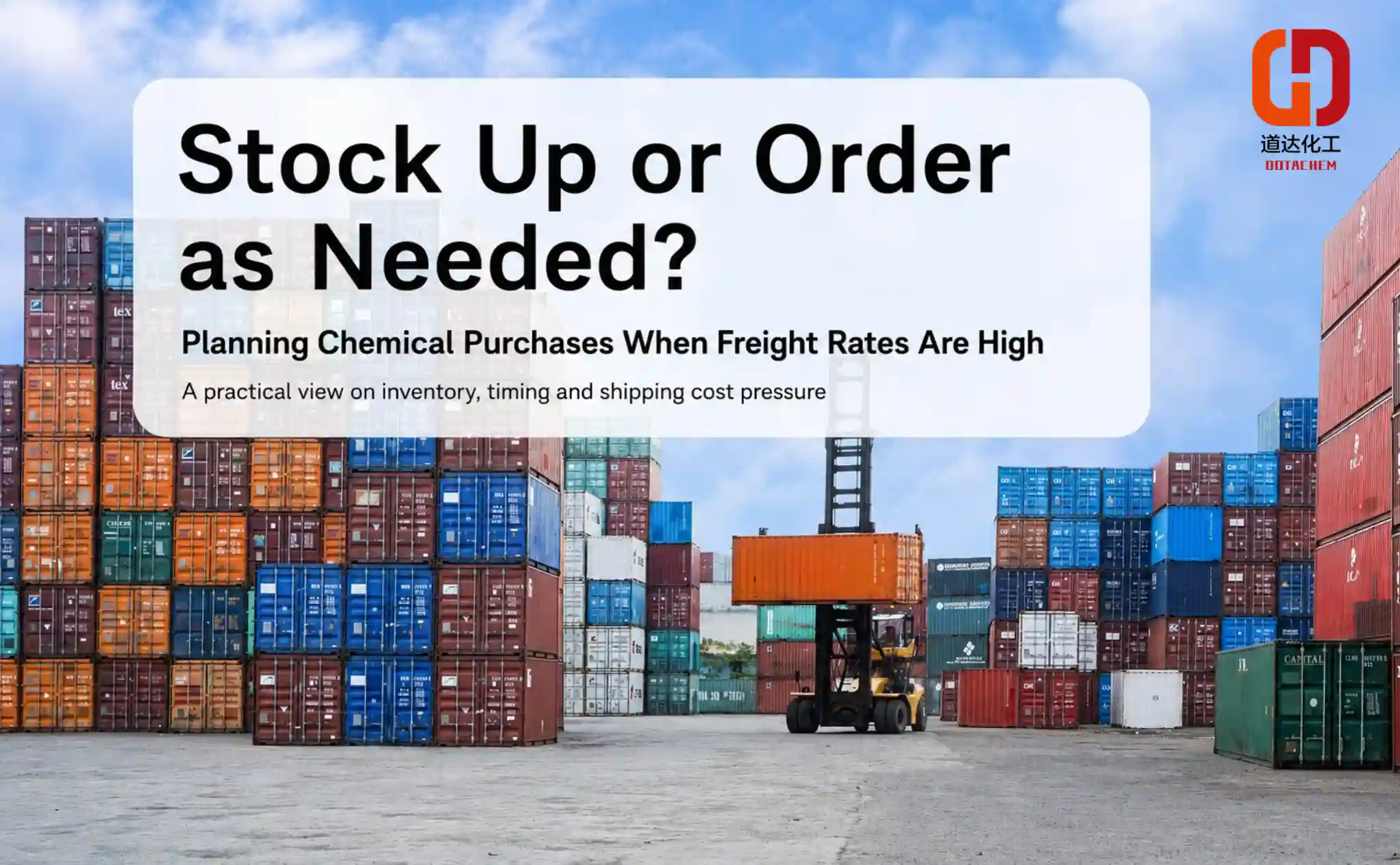
Stock Up or Order as Needed? A Practical Cost Discussion for Chemical Buyers When Freight Rates Are High

2026-07-03 0 Leave me a message


Ocean freight rates have moved up again in mid-2026. Recent Drewry World Container Index data shows that container freight costs are still rising, adding new pressure to chemical raw material sourcing from China.


For chemical buyers, this brings up a practical question: should they purchase more material ahead of time, or continue ordering only as needed?


There is no single answer. The better choice depends on product demand, storage conditions, cash flow, shelf life and delivery schedule. But when freight rates are changing quickly, the decision should not be left too late.


When Forward Purchasing May Make Sense


Forward purchasing may be worth considering when the buyer has stable demand over the next one to three months. If the product is used regularly in production and storage space is available, ordering a larger quantity may help reduce repeated freight exposure.


This can apply to chemical raw materials with relatively predictable consumption, such as surfactants, glycols, alcohol ethoxylates and other industrial materials used in ongoing production. Instead of paying freight several times for smaller shipments, buyers may choose to combine part of their demand into one shipment.


The benefit is not only freight cost. During periods of rising rates or tighter vessel space, a planned larger shipment may also reduce the risk of material shortage caused by delayed booking or longer lead times.


When Ordering as Needed Is Still Safer


For some buyers, warehouse space, working capital or uncertain demand may make a large upfront order difficult.


Freight rates can rise quickly, but they can also fall when peak season demand softens. If a buyer purchases too much material at a high freight level and rates move down later, the cost advantage may not be as clear.


Product price movement should also be considered. If raw material prices are unstable, locking in a large volume too early may create another kind of cost exposure.


For buyers with irregular demand or limited storage, ordering as needed may still be more flexible, even if the freight cost per shipment is higher.


A Middle Option: Partial Stocking


For many chemical buyers, the answer may not be full stocking or pure just-in-time purchasing. A partial stocking strategy can be more practical.


For example, buyers may cover four to six weeks of stable demand instead of purchasing three months of inventory at once. This can reduce freight exposure while avoiding too much pressure on cash flow and warehouse space.


Partial stocking may be useful for products with regular demand but changing freight conditions, such as Sodium Lauryl Ether Sulphate(SLES 70% ), Alkyl Polyglucoside (APG), Lauryl Alcohol Ethoxylate (AEO), Polypropylene Glycol (PPG), Polyethylene Glycol (PEG), Castor Oil Ethoxylate and other chemical raw materials used in cleaning, personal care or industrial applications.


Why Earlier Decisions Matter


When freight rates are moving quickly, waiting too long can change the whole cost calculation. A quotation that works this week may need to be adjusted next week if the freight rate changes again.


For buyers with stable demand, it is better to review inventory, storage space and upcoming production plans as early as possible. The goal is not to stock up blindly, but to decide sooner whether forward purchasing, partial stocking or regular ordering is the better choice.


Early decisions also give suppliers more time to check product availability, packaging options, shipment schedules and export documents. This can make the order process smoother and reduce last-minute pressure when freight space becomes tighter.


What Buyers Can Compare Before Making a Decision


Before deciding whether to stock up or order as needed, buyers can compare several points:


  • Expected consumption over the next 60–90 days
  • Available warehouse space
  • Shelf life and storage requirements
  • Difference between one larger shipment and several smaller shipments
  • Current freight level and possible rate changes
  • Working capital pressure
  • Product price trend
  • Delivery deadline and production schedule


The final decision is not only about whether freight is high. It is about whether the freight saving can cover storage cost, capital pressure and inventory risk.


Dotachem Support for Chemical Raw Material Orders


Dotachem supplies surfactants and specialty chemical raw materials, including SLES 70%, APG, AEO series, PPG, PEG, Castor Oil Ethoxylate, Nonylphenol Ethoxylate (NPE) and related products for cleaning, personal care and industrial applications.


When freight rates are high, early communication can help buyers compare different purchasing options. Dotachem can support customers with product information, sample arrangement, packaging discussion, quotation updates and shipment communication according to actual order needs.


If you are planning chemical raw material orders from China, contact Dotachem to discuss current pricing, product availability, packaging options and shipment plans.


Related News
Leave me a message
X
We use cookies to offer you a better browsing experience, analyze site traffic and personalize content. By using this site, you agree to our use of cookies.Privacy Policy
RejectAccept